Tuesday, December 16, 2008
Reflection Paper

Monday, December 1, 2008
Chapter 13 - Law
I thought that during the whole proposition 8 controversy was going on that personal and public expression went way too far. There were certain commercials that were aired that really bothered me and that attacked the LDS church. There were people who grafitied sacred temples, and defiled sacred things. These personal and public expressions need to be curbed. Everyone has their right for freedom of speech and to put up whatever they want on TV, but it gets ridiculous when it tears down other people's opinions.
I don't really think there is a way to remedy these kinds of outbursts and events because people do have a right to what they can say and do. You can't take away someone's right to personal or public expression. That's just in violation of the 1st Amendment.
Chapter 12 - Public Relations
Yes. What is wrong with making the truth look good? PR is just making the truth look good to the public. It actually benefits the company, and even sometimes the customers. The problems that come with PR is when it becomes a telling of lies instead of the truth. PR is essential for some companies to keep their reputation and for businesses to thrive.
2. Showman P.T. Barnum epitomized 19th century press agentry with exaggerated claims such as those about Tom Thumb and Jenny Lind. Do such promotional methods exist today? Are there examples?
I don't believe such methods exist today. People are more critical of the press now a days, and the claims of those who run it. When something is said, usually someone will actually see if that source is accurate, especially if it seems outlandish. At least those who are more educated will be critical of such claims and advertising.
Chatper 11 - Advertising
GOOD

This advertisement is good because it's very unique in it's approach. It's interesting, and different. You can understand exactly what message the advertisement is saying without it blatantly being thrown in your face.

This advertisement is so good because it sends off the message that without ketchup, your food will not taste delicious - instead, it may just taste like cardboard. It makes you think you can not live without the product. The presentation is wonderful, and very creative.
BAD

I don't think this advertisement is that good because first of all, the presentation isn't that interesting, or unique. It doesn't really make you want the product.

This advertisement just isn't that aesthetically pleasing. It could have used better text, better placement, and even a better photo.
2. Is advertising effective? Why? List some examples of where it did and did not influence one of your buying decisions.
I think advertising is very effective, if done right, and creatively. If you make the customer think that they can not live without that product, or that it will make life easier, you'll make them want it all the more. If you can make an advertisement stick out in someone's mind when they go to the grocery store and are deciding between which paper towels to buy, and your advertisement pops up, you'll know which one they most likely will choose.
Advertising influences some of my decisions, but not all. Price definitely has a bigger say sometimes, but there are certain cases where an advertisement has affected one of my purchases - such as food. If I see a food advertisement on TV that is promoting something that looks good, I'll usually consider buying it. If I'm hungry, it has even a bigger influence. Sometimes I'll drop everything and go get something from that restaurant, store, etc. Advertisements don't really influence the more important things in my life such as which bank to bank from, where to get my car repaired, which insurance to choose, and what make-up to wear. :) For those life decisions, I rely more heavily on others opinions or recommendations.
Chapter 9 - Television
While watching television during Thanksgiving break, I realized how much television is just an escape for me. Something to keep my mind of the stress and to help me relax. I learned that the most interesting shows to me were the ones that were actually found on the discovery channel, or on the food network. I also realized that with cable, television is actually becoming better at having shows that are actually worth watching.


2. Critiques argue that in trying to "offend no one," the networks tend to offer TV programs that appeal to the "lowest common denominator." Do you agree? Can you name programs that are definitely for the LCD? Can you think of any network programs that defy the LCD label? Explain.
Yes, most television shows are catered to the LCD. You don't need to be smart to watch TV. Some LCD shows that came to my mind right off the bat are:
The Simpsons
American Idol
Friends
Seinfeld
Survivor
Heroes
Lost
and LOTS more.
I think the only programs that defy the LCD label are the ones that are on the cable channels such as the History channel and the Discovery channel. These channels at least have programs that are at least higher up on the IQ scale.
3. Many people would say that television has had a greater impact on society than any other form of media. Do you agree? Why or why not?
I do agree. Television can appeal to all audience, can be understood by every man woman and child. You don't have to read to understand the shows that are on. While not everyone gets the newspaper, or reads, television is a common medium that everyone can understand.
Chapter 8 - Movies
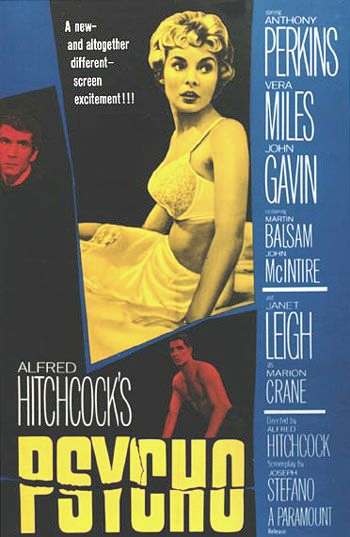
I believe it is simply society accepting what we are given. 20 years ago, the ratings for movies were much more different than they are today. For example, the movie Psycho, which was released in 1960, had a rating of M, for mature audiences. But today, that movie is considered hardly "bad" at all.
We, as a society, have been desensitized by what the movie producers are making. That is why each movie seems to try and one-up the other by more sex scenes, violence, nudity, or bad language. It's seems the more controversial the movie is, the more publicity it receives. Because we are becoming immune to these changes in movies, it seems we require more to make the movie good in our eyes.
2. If you were a movie producer, what would you do to make a box office hit in 2008?
I would make sure that there was plenty of drama, adventure, comedy and especially romance. The movie would have to appeal to both women and men, so that is why romance is so important. I think big office hits seem to have all of the essentials such as the ones I've previously listed.
Thursday, October 16, 2008
Chapter 7 - Sound
1. Come up with a list of 5 radio stations in the Utah area (choose from FM and some AM stations - music and talk). Write a description of each station including format, advertising, and target audience. What makes each station successful?
2. Radio is described as "the most personal of the media," why is that? Why do you think music is an important part in radio programming? Why is talk radio so popular?
Radio is the most personal of the media because of the interaction we can have with the radio stations, the DJ's, and the advertising. While growing up, I used to listen to Radio Disney all the time. What made it so fun was that little kids (like me) could call the station and win prizes, make a comment about something, or vote on a song to play over, or to get rid of. Radio's rely heavily on the listeners and their reactions. This is why radio is so personal.
Music is a big part in radio programming because radios only use one sense - our ears. We can only listen to what is being played. This makes it crucial for the stations to appeal to their listeners because they only get one way to do it.
Talk radio is popular because it goes back to the "personal" factor. Two people on a radio station are able to talk however, and on whatever they want to, while getting the listeners feedback by having people call in and participate in the conversation. In times like these when there are so many controversial issues in America, we turn to talk radio.
Chapter 6 - Newspapers
1. Many metropolitan daily newspapers have lost circulation and some have shut down. Why? Any examples? Community newspapers however,especially suburban weeklies, are booming. Why? Any examples?
In the news world today, the internet seems to be the fastest, easiest, and most up-to-date way to receive news. It's free and you can get it off your phone, on your lap top, or any where else you can get the internet. I think the internet has made a huge impact on newspapers today. I know a lot of people don't subscribe to newspapers anymore. My parents just moved to a different part of the state, and I highly doubt they'll order the newspaper anymore, just because they can get it so easily on their computers and it's cheaper. I know most of my siblings don't get the newspaper either. We are coming to a generation where the internet is starting to take over a lot of the news business. I just looked up an article on the New York Times that said they were laying 550 people from their company.

Community newspapers, on the other hand, are probably getting more business because they hit closer to home. In a community newspaper, you can find out about local news, like what's happening with the people you know. By doing research over the internet I found out that the suburban papers are doing better because of their increase in circulation, readership loyalty, and ad revenues. Examples of booming newspapers are the Washington, D.C. suburban papers, which are booming right now.

Friday, September 26, 2008
Chapter 5 - Magazines

Chapter 4 - Books
I posed the questions to my family during our family reunion one weekend. Here is what I came up with when I started with the question "Read any good books lately?"
The Ten People I polled:
Dad: Recently read Biography of John Adams, The Autobiography of Moss Heart, and a Durk Cussler book. He's read 6 books in the last 6 months. He likes to read non-fiction, biographies, and some fiction.
Kenzie: hadn't read any good books lately. She read 3 books in the last 6 months, and she usually likes fiction, and non-fiction.
Chase: recently read The Book of Mormon, Meek and Lowly, and Psalms of Ancient Israel. Ge;s read 3 books in the last 6 months and he usually likes religion and biographical books.
Grandma: Recently read The Lottery, Life on the Refrigerator Door, and Death in Vienna. She's read 12-15 books in the last 6 months and she likes scripture, fiction, and current non-fiction books.
Amber: recently read The Shack, Breaking Dawn, and Stolen Innocence. She's read 6 books in the last 6 months and she usually reads non-fiction.
Kristin: recently read Escape. She's only read 1 book in the last 6 months and she usually likes non-fiction.
Mom: recently read Star Girl. She's read 3 books in the last 6 months and usually goes for biographies and non-fiction books.
Cam: recently finished the Eragon Trilogy and Artemus Fowl. He's read 4 books in the last 6 months, and usually goes for fantasy, mystery, adventure, and books on tape.
Jason: finished Good to Great and Playing for Pizza. He's read 3 books in the last 6 months and usually goes for religious or fantasy books.
Maria: recently read These is My Words, Sarah's Quilt, and Unconditioned Parenting. She's read 10 books in the last 6 months and usually likes to read fiction and parenting books.
The sample I chose was not very diverse. Mostly my family focuses on religious books, or non-fiction, but the fact is - we all read books. We are all literate, and we are a big book reading family. But books are a big part of today's society. There are few people in the U.S. today that can not read, or that don't read any books at all. In public schools we are required to read certain books, in college we are supposed to read our textbooks, and other literature for classes. I believe nothing will take the place of an actual paper book. But reading has become a past time. By looking at my sample, you can see who values books, or who may have more time than others to read. For instance, my Grandma has read almost 15 books in the last 6 months, and my sister in law has only read 1. Well Grandma lives alone, doesn't work, and no longer has a family to take care of. She has all the time in the world to read, where on the other hand, my sister-in-law is a mother and she works at the same time. Reading books has become a leisurely activity. (unless of course, you are in college or any kind of school.) We have so much other forms of entertainment, that reading isn't as popular is was back 100 years ago. Other media has taken it's place, but it still survives. Books and authors adapt, and they will continue to be a good source of learning, entertainment, or escape.
Friday, September 19, 2008
Chapter 3 - Mass Communication Effects
Asians are super smart
Irishmen are alcoholics
White people are racist
BYU students are self-righteous
U of U students all drink


